MFC APPLICATIONS
Microfibrillated cellulose (MFC) creates opportunities for paper, board, packaging applications – and more – to improve product performance, reduce material consumption and costs, and develop new fiber-based products.
The benefits of in-house Microfibrillated Cellulose (MFC) grinders extend across paper, board and packaging, from improving strength and bonding to enabling fiber and filler optimisation, lightweighting and enhanced surface properties. MFC applications are expanding as manufacturers explore ways to achieve more from their existing fiber resources.
By increasing the bonding potential and functional properties of cellulose, MFC grinders from Fiberlean can help manufacturers achieve more with their existing raw materials – from increasing filler content and reducing higher-cost fiber use to improving strength, surface properties and barrier performance.
MFC Application Specialists
Our technology is supported by extensive experience in MFC application development and industrial trials, helping customers identify where MFC can deliver measurable technical and commercial value.
The opportunity depends on the application. Explore where MFC could make a difference to your products and processes.
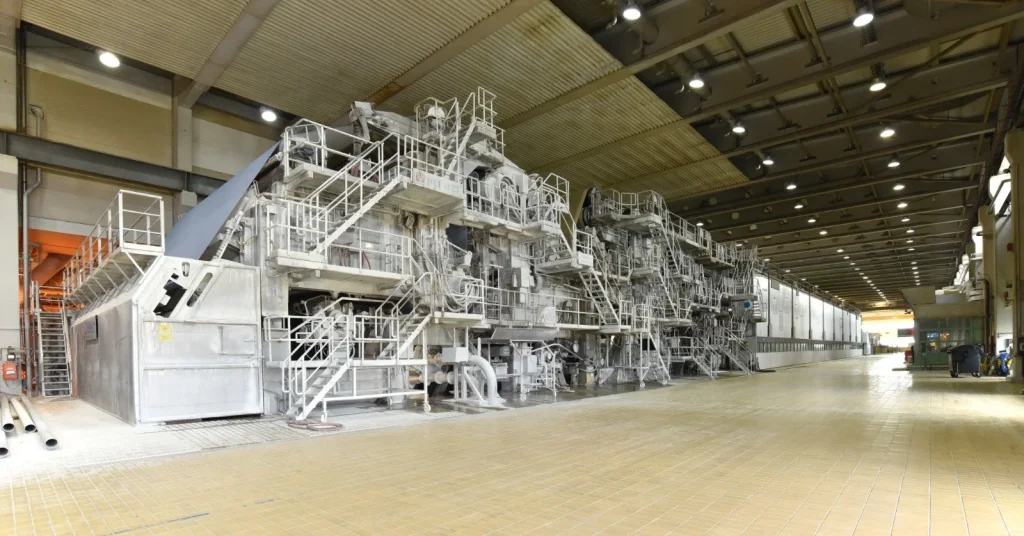


MFC applications and benefits in paper, board and packaging
Where could MFC add value to your production process? The benefits of MFC depend on the application, material formulation and manufacturing conditions. Explore how MFC can create technical and commercial value across different paper, board and packaging grades.




From potential to proven results
Real-world trials show how MFC can deliver measurable performance improvements in commercial products.
IN COMMERCIAL WHITE TOP LINER TRIAL
The use of microfibrillated cellulose as an additive in fiber-based products has several benefits; (i) enhancing bonding within fiber-based materials, (ii) forming closely packed, low porosity layers, (iii) wide regulatory clearance and (iv) its recyclable and compostable nature. These benefits can be used by papermakers in many ways including lightweighting, increased filler use, reduced long fiber use, improved mechanical and elastic properties, improved coverage and barrier properties, and improved environmental performance.

The value of MFC is determined by what it enables in the finished product and manufacturing process, not simply by the cost of producing the material.
FiberLean’s industrial trials and application development work demonstrate how MFC can contribute to improvements in material efficiency, product performance and production economics.
For example, in one commercial white top liner trial, a 2.5% MFC addition enabled a 28% reduction in white-layer fiber consumption, while maintaining product specification and machine runnability.
Results depend on the application, furnish, operating conditions and the changes made to the production process.
MFC beyond paper and packaging.
The functional properties of MFC also create opportunities across other industries.
Although paper, board and fiber-based packaging remain FiberLean’s primary commercial focus, MFC’s bonding, reinforcing, rheological and network-forming properties are being explored in a wider range of materials and processes.
Construction and building materials
MFC is being investigated for use in fiberboards, cementitious products and other building materials, where its binding, reinforcing and water-retention properties may provide functional benefits.
Paints, coatings and adhesives
MFC’s shear-thinning behaviour offers opportunities for controlling viscosity, flow and application characteristics in water-based formulations, alongside potential binding and reinforcing benefits.
Composites and technical materials
MFC is being explored as a reinforcing or binding component in bio-based composites, nonwovens, films and other technical materials.
Food and pharmaceutical research
MFC’s potential as a thickener, stabiliser and texture modifier is also being investigated in specialist formulations, subject to the relevant application-specific safety and regulatory requirements.
Binder
Due to its high surface area, MFC acts as a very effective binder in a variety of substrates.
Rheology modifier
The fibrillar network structure of MFC gives it a shear-thinning rheology profile that is tolerant to changes in temperature, pH, and salinity.
Barrier and filtration
When cast into a film or coating layer, MFC acts as an effective barrier against grease and oxygen. It can also act as a filtration medium.

MFC has many potential applications beyond paper and packaging. MFC can be used as a rheology modifier in a wide variety of formulations, a binder in fiberboards, a principal ingredient or a coating in non-wovens, a reinforcing agent in polymer composites, an ingredient in food and for many other applications.
MFC Technology
Understand how MFC works, how different production methods compare and the technical and commercial considerations behind adoption.
Discuss your MFC application.
Could MFC help you achieve more from your materials or manufacturing process?
Whether you’re looking to improve an existing product, reduce production costs or develop something new, FiberLean’s specialists can help assess the potential and identify the most appropriate next steps.