a complete guide to mfc
What Is Microfibrillated Cellulose (MFC)?
Microfibrillated cellulose (MFC) is the name given to a family of cellulose biomaterials made up of very fine fibrils, used to improve mechanical properties, barrier performance, lightweighting and sustainability, across paper, packaging and coating applications.
To produce MFC, pulp fibers are fibrillated through mechanical processing, separating the cellulose fibers into microscopic fibrils – tiny, hair-like structural elements. Some production routes also use chemical or enzymatic pretreatment before the mechanical stage. The processing creates more surface area for bonding and helps the MFC form a reinforcing network.
This can help mills use fiber and filler more efficiently and sustainably, support lightweighting and create smoother, low porosity surfaces and barrier structures.
Increase bonding
Improve strength
Reduce porosity
Explore this guide to MFC
Learn what microfibrillated cellulose (MFC) is, how MFC is produced, how it works, what it is used for, and how mills can trial and integrate on-site MFC production with FiberLean MFC grinders.
Scroll through the guide, or use the sticky navigation at the top of the page on desktop or ☰ menu on the left on mobile to jump to a topic. You can also start with one of these sections:
We take your fiber and make more of it
How Is Microfibrillated Cellulose (MFC) Produced?
Cellulose pulp
Natural fibers suspended in water enter a grinder
Mechanical processing
Fibers subjected to mechanical forces
Surface fibrillation
Fine fibrils released from fibers exposing a larger active surface
MFC produced
Fibrillated cellulose network formed
The starting point is cellulose
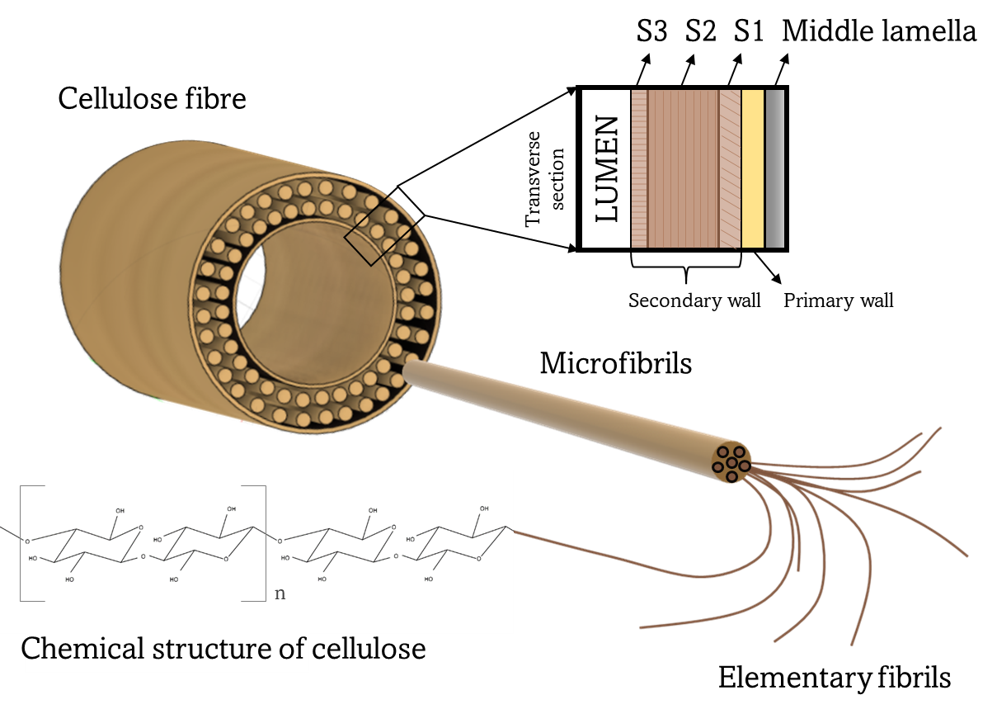
Cellulose fibers are an essential structural component in plants, and are a fundamental constituent of paper and board products. Cellulose fibers have a hierarchical microstructure consisting of fibrils and microfibrils.
Microfibrillated Cellulose (MFC) is formed when cellulose fibers are mechanically broken down to expose and liberate these fibrils and microfibrils. This fibrillar structure gives MFC its unique performance characteristics.
Compared to cellulose, MFC has a much higher specific surface area and particle aspect ratio, which greatly increases hydrogen bonding and network forming capability.
The bespoke nature of MFC
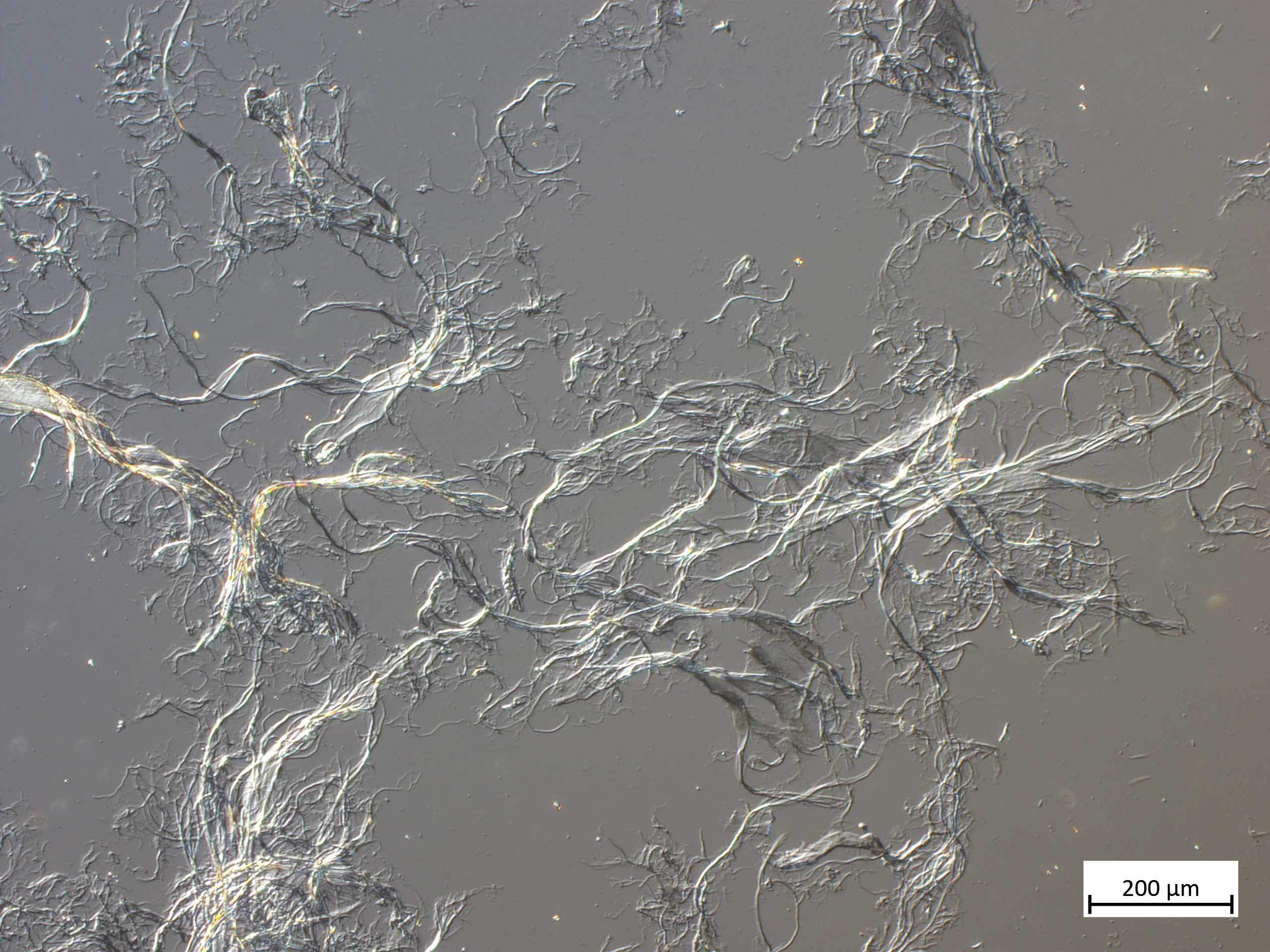
The FiberLean grinding process typically generates MFC with an abundance of long, thin microfibrils, which improves the bonding ability of MFC in all strength-related paper properties.
These microfibrils tend to be connected together in a coarse sub-millimetre scale macrostructure, that greatly improves the inter-particle bridging ability of the MFC.
This results in a considerable improvement in retention and in bridging-sensitive paper properties such as tensile strength and porosity, compared to alternative production methods that rapidly degrade the macrostructure.
MFC isn’t a single material
The pulp source, production technology, any pretreatment, operating conditions and energy applied influence the morphology, performance, and cost of the resulting MFC.
Different mechanical technologies can be used, including refiner-based systems and stirred-media grinders, as supplied by FiberLean. Pretreatment is not universal: certain routes prepare or modify the pulp chemically or enzymatically before mechanical fibrillation.
Two materials described as MFC may therefore behave very differently in the same application.
The FiberLean Approach to On-Site MFC Production
FiberLean supplies industrial vertical, wet, stirred-media MFC grinders that allow paper and packaging mills to produce microfibrillated cellulose (MFC) on site, close to where it will be used.

Produced on-site
The grinder is integrated into your production, producing MFC as part of your process, with low supervision.
Fully mechanical
The process is 100% mechanical. Additive and enzyme free.
Tuned to application
The grinder is highly tunable, optimising MFC structure property relationships for a range of applications.
A mill can use a suitable cellulose pulp from its own fiber supply. If the mill’s usual pulp is not appropriate for the intended application, or different MFC characteristics are required, another selected pulp source can be used.
FiberLean’s process is fully mechanical and does not require chemical or enzymatic pretreatment. Grinder conditions can be adjusted to suit the chosen pulp and the performance required from the MFC.
For many in-furnish paper and board applications, FiberLean grinders are configured to create extensive fine surface fibrillation while retaining the larger connected fiber structure (or macrostructure) as coarse as practical. In other applications, for example in coatings, the MFC macrostructure can be adjusted to allow higher solids applications. The relationship between morphology and performance is explained in How Does MFC Work below.
Laboratory and production trials are used to establish the appropriate pulp source, grinder conditions, MFC dose, capacity requirement and expected value before equipment is selected.
How FiberLean Grinders Work
FiberLean MFC grinders use vertical wet stirred-media-mill technology. Each grinder contains an agitator within a fortified chamber partially filled with ceramic grinding media, typically around ~1–5 mm in diameter. Cellulose fibers enter the grinder as an aqueous suspension.
The agitator transfers energy to the grinding media, causing the beads to collide. These forces act on fibers caught between the beads, progressively breaking and fibrillating them to produce MFC. Door screens allow the finished MFC to leave the chamber while retaining the grinding media.

The process

FiberLean’s technology & production capability deliver practical advantages
Simple, robust grinder technology supports continuous production, with uptime exceeding 98% in established operations.
Grinding media can be replenished progressively without requiring a complete replacement shutdown.
In-house production can reduce the cost of MFC significantly compared with previous production methods and externally sourced merchant material.
Typical production costs are approximately €150–350 per tonne, depending on the application and operating conditions.
Process variables can be adjusted to the fiber feed and application, helping manufacturers engineer the MFC structure and performance they need.
In comparative trials, FiberLean technology has outperformed competing approaches by approximately 30%.
Compact, high-throughput equipment and relatively low total project capex create a practical route from initial trials to full-scale production, supporting shorter payback periods.
FiberLean can provide MFC at up to 20% solids for customer trials and interim supply, enabling manufacturers to evaluate performance before installing in-house production.
The FiberLean MFC Grinder Range
FiberLean offers three grinder models for different production requirements. Capacity depends on the selected specific energy input, required MFC quality and operating assumptions, so it should not be treated as a single fixed figure.
G125

The smallest FiberLean MFC grinder.
Ideal for moulded fiber, specialty applications and research.
G175

The mid-scale FiberLean MFC grinder.
Ideal for tissue and smaller paper mills.
G250

The largest FiberLean MFC grinder.
Ideal for medium to large paper and board mills.
Find Your MFC Grinder

How MFC Quality and Grinder Capacity Are Balanced
Specific energy input is the principal operating parameter in MFC production.
The grinder normally operates at a fixed motor power, with specific energy input controlled primarily by changing the flow rate through the grinder. A lower flow rate gives more energy per tonne and produces more highly fibrillated MFC, but reduces capacity. A higher flow rate increases capacity but with less energy per tonne.
More highly fibrillated MFC may achieve a target paper property at a lower addition level. The optimum is therefore not simply the highest possible degree of fibrillation. It is the point at which MFC quality, required dose, drainage or dewatering performance, production capacity and operating cost provide the best overall result for the mill.
In many applications, the optimum specific energy input is typically around 1,500-2,500 kWh per dry tonne of MFC, although this may be application specific.
Finding your flow
Higher flow rate
More energy per tonne, greater fibrillation and lower capacity.
Higher flow rate
Higher capacity, with less energy applied per tonne.
How does MFC work?
MFC is not a single, uniform material. Its properties can be engineered to suit applications. MFC’s performance depends on the balance between its surface microstructure and its larger-scale macrostructure, which can be adjusted through the production conditions.
Grinder-produced MFC is best described as a ‘surface nanostructured macromaterial’.
This precise term captures two structural characteristics that exist simultaneously in FiberLean MFC – and together explain why it outperforms alternative MFC production methods in key industrial applications.


Balanced benefits
At the surface level, MFC has micrometre and nanometre scale fibrillar structures. These fine, long micro and nano fibrils enhance bonding at fiber-fiber joints and with filler particles – increasing the strength of the sheet network.
At the macro level, MFC retains a sub-millimetre coarse macrostructure. This coarser structure improves bridging between fibers and significantly improves MFC retention, and bridging related properties in the sheet during papermaking.
The stirred media mill difference
In many cases, the objective in MFC production using FiberLean MFC grinders is to efficiently generate a high level of surface microfibrillation whilst retaining this coarse macrostructure.
This is what the stirred media mill achieves – and what alternative MFC production methods sacrifice in pursuit of higher fibrillation.
Advantages in application
In paper and board, this combination can strengthen the fiber network, improve continuity within the sheet and reduce porosity.
The balance between fine surface fibrillation and the coarser macrostructure also affects how readily the MFC is retained during paper production.
Surface Microstructure and Bonding
Surface microstructure consists of a highly fibrillated fine surface. Bonding refers to the strength of adhesion at individual fiber-fiber joints. This is driven by MFC’s micro and nanostructure.
Fine micro- and nano-scale fibrils create accessible cellulose surface and bonding opportunities. The exposed fibril surfaces carry hydroxyl (-OH) groups that readily form hydrogen bonds with adjacent fibers, fillers and other fibrils.
In a paper or board sheet, this creates a denser, stronger bonded network. This is why even relatively small additions of MFC (typically 1–5% on furnish) can produce measurable significant improvements in mechanical properties including tensile strength, burst and internal bond (scott bond).

Surface Microstructure and Bonding
One of the key distinguishing features of FiberLean’s stirred media milling technology is that the fibrillation action preserves the fiber aspect ratio.
Unlike disc refiners – which can shorten and damage fibers through cutting – the intense micro-grinding action of the stirred media mill peels fibrils away from the fiber wall.
This means the resulting MFC retains a coarse macrostructure alongside its fine surface fibrillation, delivering both strength reinforcement and improved formation.
Macrostructure Bridging and Retention
Bridging refers to the ability of MFC particles to span and connect multiple fibers across the sheet. This is driven by MFC’s coarse macrostructure. Larger MFC particles in a connected fibrillar structure can ‘bridge’ or overlap multiple fibers simultaneously, closing pores and improving the continuity of the fiber network.
Macrostructure also affects how readily MFC is retained during sheet formation. MFC retention in the sheet during papermaking is a commercially significant factor that is often overlooked. Poor retention means MFC passes through the wire into the white water system – material cost that does not contribute to product performance.
Because FiberLean grinder-produced MFC retains a coarse macrostructure, it achieves higher sheet retention than alternative MFC production methods at equivalent energy input. The larger particle size of grinder MFC means it is more readily captured in the fibre network during formation. This directly reduces material losses and improves the economics of MFC adoption compared to finer-ground alternatives.
THE BEST OF BOTH
The FiberLean Difference
For many in-furnish paper and board applications, FiberLean grinder conditions are selected to produce extensive surface fibrillation while retaining the macrostructure as coarse as practical. For some coating requirements, a finer macrostructure may instead be preferred.
What the Comparison Evidence Shows
In laboratory comparisons at equivalent production energy, grinder- and refiner-produced MFC delivered similar Scott Bond performance. FiberLean grinder-produced MFC retained a coarser macrostructure and showed stronger performance in properties influenced by bridging and retention, including porosity reduction and tensile performance.
Separate laboratory work indicated potential dose savings of approximately 30% for equivalent porosity and 15% for equivalent tensile strength compared with refiner-produced MFC. No dose saving was observed for equivalent Scott Bond.
Is MFC the Same as Nanocellulose?
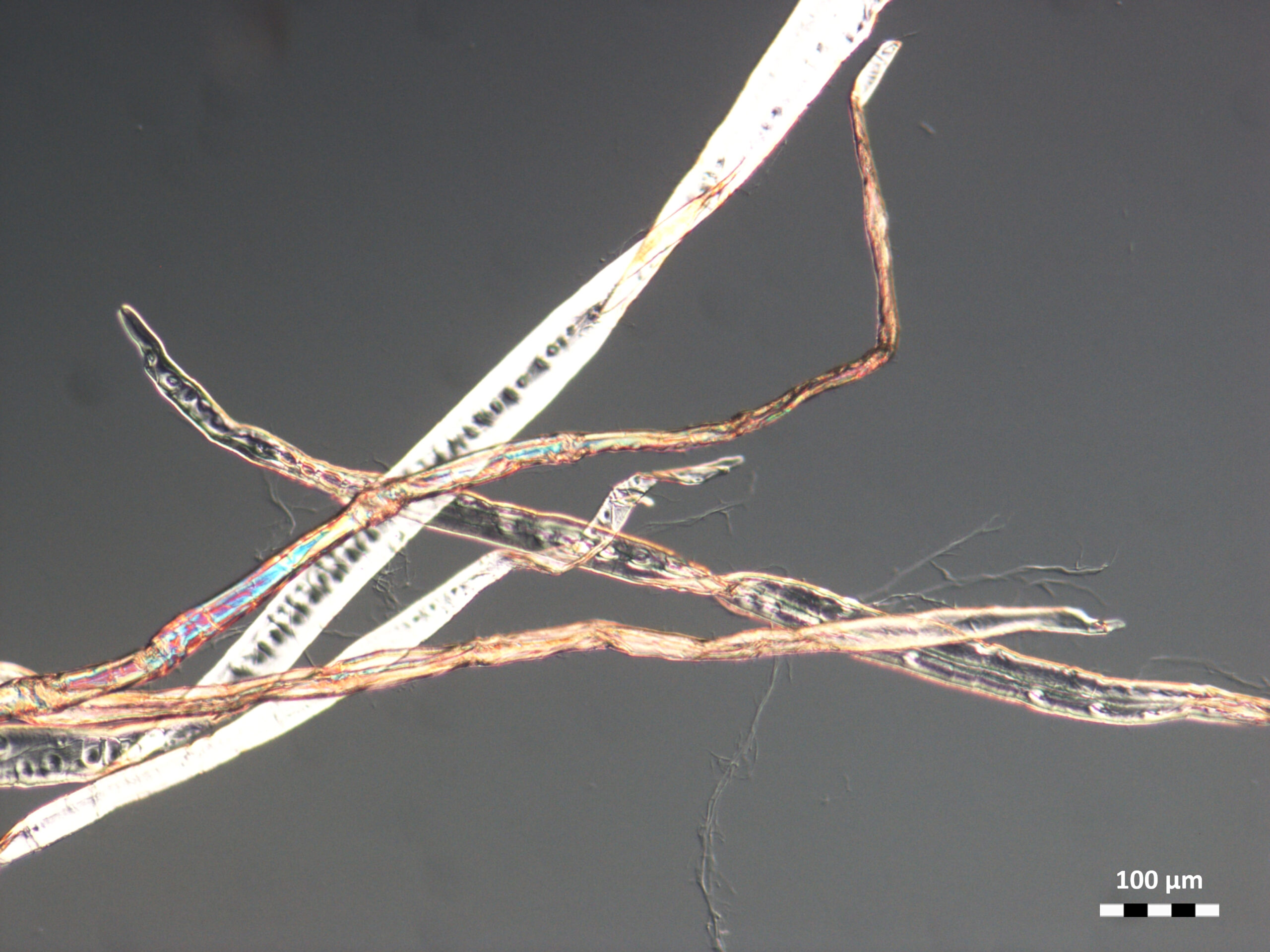
MFC and nanocellulose are closely related, but the terms are not interchangeable. Microfibrillated Cellulose (MFC) typically contains a broad distribution of structures: larger, partially fibrillated fibers alongside fine micro- and nanoscale fibrils that remain attached to them.
In cellulose nanofibrils (CNF), processing goes further, so the original pulp fiber structure is largely broken down into more highly separated nanoscale fibrils, separated from the original fiber. Cellulose nanocrystals (CNC) are different again: they are much shorter, rigid, crystalline particles, usually produced by removing the less crystalline regions of cellulose.
One of the distinguishing features of FiberLean’s stirred-media milling technology is that it develops extensive surface fibrillation while preserving a longer, coarser fiber macrostructure.
Terminology is not fully standardised, so a material’s name alone does not define its structure or performance. Its raw material, production route, morphology and suitability for the intended application should all be considered.
In Furnish
When MFC is added to the furnish, it becomes part of the fiber network. Its primary effects can include higher bonding, lower porosity, improved formation and increased wet-web strength.
These direct effects can create opportunities for secondary optimisation, such as reducing grammage, adjusting the fiber mix, increasing filler content or lightweighting the finished product.
MFC can also reduce drainage rate and bulk, so the complete furnish and chemistry programme must be evaluated during trials.
Surface
MFC can be applied as a surface layer to reduce porosity, create a smoother and denser substrate, improve coating holdout and contribute to grease-proof or multilayer barrier structures.
MFC suspensions are highly shear-thinning -behaving as a thick gel at rest, but flowing freely when shear is applied. This makes it possible to coat or spray MFC to form a dense, consolidated layer as shear is removed. This rheological behaviour is also valuable in paints, adhesives and construction applications.
Wet-end coating
In addition to conventional surface coating, MFC can be applied as a wet-end coating via a FiberLean surface applicator positioned on the wet end of the paper machine wire. This is a distinct application mode that delivers significant sheet closure effects at relatively low MFC coat weights.
typical Applications Of MFC
MFC is used as a reinforcing, binding, network-forming, barrier and rheology-modifying material. Its precise morphology depends on the desired function.
Current applications are across paper and packaging, coatings, composites, construction materials and other formulated products. FiberLean’s principal industrial focus is the production and use of MFC in paper, board, tissue, specialty paper and fiber-based packaging.
MFC Trial Results
MFC Beyond Paper
While the primary commercial focus for FiberLean technology is paper, board and packaging, MFC produced by stirred media milling has demonstrated value across a range of other industrial applications. This breadth reflects the fundamental versatility of MFC as a functional biomaterial.
The properties that make MFC useful in paper – high surface area, hydrogen bonding, shear-thinning rheology, barrier-forming network structure – translate directly into performance advantages in other industries.
If you have an interesting new application for MFC, please get in touch via our contact form.
Construction materials
Paints, coatings and adhesives
Food and pharmaceutical applications
Composites and technical materials
Why Use MFC
Paper and packaging manufacturers face continuing pressure to control fiber and energy costs, reduce material use, improve recycled-fiber performance, meet changing packaging requirements and develop higher-value products. Microfibrillated Cellulose is commercially interesting because one technology can contribute to several of these objectives at the same time.
Value-add With MFC
The same MFC addition that reduces fiber cost also improves sheet strength.
The same MFC coating that replaces PFAS also improves surface quality for subsequent functional coatings.
The same on-site MFC production model that eliminates transport emissions also eliminates the logistics cost of buying and shipping water.
FiberLean’s approach brings production, control and technical support together, on-site.
Why Produce MFC with a FiberLean Grinder?
FiberLean’s grinders are backed by a team with extensive experience in MFC production and its use in paper and packaging. That knowledge has shaped a robust, tunable technology designed for reliable on-site production. It also helps mills select the MFC quality, dose and production capacity that deliver the best result for their application.
Operational simplicity & reliability
Robust, continuous production, automated operation and typical availability above 98%, subject to the stated operating and maintenance basis.
Control over MFC
Suitable pulp feeds and operating conditions can be selected to balance morphology, dose, capacity and application performance.
Competitive on-site economics
Indicative direct production costs of approximately €150-€350 per dry tonne of MFC, subject to energy prices, consumables, operating conditions and the required energy.
Avoided merchant costs
Producing MFC on-site avoids routinely transporting a low-solids product and removes the merchant producer’s margin.
Application-specific performance
Laboratory evidence indicates property-specific dose-efficiency advantages over refiner-produced MFC.
Staged investment
Representative material, production trials and site-specific engineering allow performance, integration and commercial value to be assessed before final equipment selection.
How FiberLean Has Addressed the Barriers to MFC Adoption
The grinder is one part of making MFC practical for mills. FiberLean has also worked to address the questions that arise when a promising material moves towards industrial use, from trials and integration to regulatory status.
MFC has demonstrated valuable properties for many years, but industrial adoption has often been restricted by practical obstacles: complex production, high energy demand, limited access to trial material, uncertainty about integration, high delivered costs and difficulty matching MFC quality to a specific application.
FiberLean’s grinder technology and implementation model are designed to address these obstacles. It gives mills a practical way to produce, test, optimise and evaluate MFC before committing to a full installation.
Scroll the long-standing barriers to MFC and how FiberLean has unlocked these below, or read our MFC barriers-to-adoption story and supporting evidence by clicking here.
From Barrier to Practical Solution
Each point below shows a common obstacle to adopting MFC and how FiberLean helps mills address it, from producing and trialling the material to assessing its regulatory status and commercial value.
Complex or unreliable production
Robust stirred-media grinders designed for continuous industrial operation, high availability and limited routine supervision
High delivered cost of merchant MFC
On-site production avoids routine transport of finished low-solids MFC and merchant supply margins
MFC treated as one fixed material
Feed pulp, operating conditions and specific energy can be adjusted to influence morphology and application performance
Insufficient material for meaningful trials
Representative material and larger trial quantities can be supplied before final equipment selection
Regulatory uncertainty
Supporting food-contact and environmental documentation is available, subject to the market, product and application
Chemical or enzymatic pretreatment
FiberLean produces MFC through a fully mechanical process without pretreatment
Limited feedstock flexibility
Grinder conditions can be optimised for a range of suitable pulp feeds, including an appropriate pulp already used by the mill or another selected source
Energy, quality & capacity trade-offs
Specific energy and flow rate can be balanced against the required MFC quality, dose, throughput and economics
Integration uncertainty
Laboratory testing, production trials and site-specific engineering establish dosing, chemistry, capacity and integration requirements
Uncertain commercial return
The value case is calculated using the mill’s furnish, energy prices, material costs, production constraints and target specification
PFAS, Regulatory Clearance and Safety
Adopting MFC also means understanding how it fits with product requirements, food-contact rules and safety assessments. Explore how FiberLean MFC can support PFAS-free packaging, along with the regulatory clearances and supporting evidence available for MFC produced using our grinders.
How MFC Supports PFAS-Free and Plastic-Reduction Strategies
PFAS-Free
MFC can contribute to the development of PFAS-free paper and fiber packaging. A dense MFC network can provide oil and grease resistance or create a smoother, lower-permeability base for a subsequent water, oxygen or grease-barrier layer.
Application Proof
In moulded-fiber studies, coatings of MFC applied to the surface of moulded fibre articles have been shown to give excellent oil and grease resistance demonstrating oil hold-out for multiple days. This is evidence of application potential, not proof that every MFC formulation or package will achieve the same result.
Plastic Reduction
MFC can also improve the performance and reduce the weight of fiber-based packaging, helping some formats reduce reliance on plastic.
Learn More about how MFC contributes to PFAS-free barrier systems.
Regulatory Clearance
FiberLean is committed to ensuring that Microfibrillated Cellulose produced using our grinders is safe, and meets all relevant regulatory requirements.
For procurement teams and technical decision-makers, this is a critical area of due diligence – and one that FiberLean has specifically addressed.
Read on to find out about each key clearance for MFC.
Food contact regulatory clearance
MFC produced using FiberLean grinders has obtained regulatory clearances for use in food-contact paper and packaging in key markets. These include relevant positions with the US FDA, Germany’s BfR, Canada and China.
FCN 002413 clearance.
Scope includes:
– As an additive, a raw material component, or coating in the manufacture of food-contact paper and paperboard.
– As a coating on food-contact polymers under a polymer barrier layer.
– As a component of adhesives used in the manufacture of multi-layer food contact materials.
Clearance under recommendations XXXVI, XXXVI/1, XXXVI/2, XXXVI/3, XIV.
Scope includes:
– Food contact use paper and board for food contact (XXXVI).
– Cooking papers, hot filter papers and filter layers (XXXVI/1).
– Paper and Paperboard for baking purposes (XXXVI/2).
– Absorber pads based on cellulosic fibres for food packaging (XXXVI/3).
– Polymer dispersions (XIV).
Grinder-produced MFC has been evaluated within Canadian and Chinese food contact frameworks (limited to 5% in the paper).
Brazil ANVISA clearance approved – awaiting publication. Clearance is equivalent to BfR.
Nanomaterial classification
The (coarse) external dimensions of the particles in FiberLean MFC products preclude its classification as a nanomaterial according to the updated European Commission Recommendation C(2022)3689.
FiberLean MFC is a nano structured material that is not subject to reporting as a nanomaterial under the definitions applied by either the US EPA or the European Commission.
This is a significant consideration for:
– Food-contact packaging manufacturers
– Procurement teams evaluating supply chain risk
– Technical directors managing regulatory exposure
– Brand owners and retailers with sustainability and compliance requirements
Health & Safety
MFC has been examined and cleared with relation to: Manufacturing and occupational exposure; Human toxicity; Ecotoxicity.
No negative health effects have been found in published independent peer reviewed studies.
Chemistry
Extensive testing required by various regulatory agencies concluded no changes were detected compared to the feed pulp other than the fiber dimensions.
Dust Testing
PM10 nanoparticle detecting technology and testing conducted at FiberLean’s UK MFC manufacturing facility, a US pilot and full-scale paper machine and paper shredding simulation, detected no nano dust beyond the background.
Discharge
Testing measured less than <10 kg cellulosic residue/ tonne MFC was discharged.
This can safely be processed through the mill effluent system or used for soil remediation.
Sustainability & End of Life
The potential environmental value of FiberLean technology comes from both production and application. Integrated on-site production of the MFC saves energy and costs through the avoidance of drying, packaging, and transportation necessary with merchant MFC. In suitable applications, MFC can support fiber substitution, increased mineral filler use, lightweighting and the development of fiber-based alternatives to some plastic structures, reducing raw material cost and overall fiber and plastic consumption.

Whilst MFC is not a final product, we have carried out the following testing to confirm MFC has no negative impact on end of life:
Recyclability
Tested bleached and unbleached MFC-coated papers passed PTS-RH 021:2012.
Biodegradability
MFC suspensions were assessed under OECD 301B.
Industrial composting
Bleached and unbleached MFC-coated papers were assessed under ISO 14855 and demonstrated full aerobic biodegradability under industrial composting conditions.
How Mills Trial & Integrate On-Site MFC Production
FiberLean uses a staged process to work with mills to test their pulp, identify the MFC properties needed for the application and assess how production would fit into their process. Drawing on extensive laboratory and industrial experience, our team helps establish the right balance of performance, capacity and cost before a grinder is selected.
Define.
Define the target application, furnish and required performance.
Evaluate.
Produce representative MFC and complete laboratory evaluation.
Trial.
Supply larger trial quantities, where appropriate, for machine-scale validation.
Quantify.
Quantify the value created and calculate the annual MFC requirement.
Select.
Select the appropriate grinder model and operating window
Design.
Design, install and commission the modular on-site production system.
Ready to start?
Discuss your furnish, application and objectives with the technical team.
Ease Of Integration
The grinder installation sits alongside existing mill infrastructure and supplies fresh MFC close to the point of use. Integration planning covers process water, feedstock preparation, dosing, automation, stock preparation, drainage, wet-end chemistry and any surface-application equipment.
Commercial experience indicates that grinder-produced MFC can often be integrated without wholesale revision of the mill chemistry programme. However, retention, drainage, sizing and other interactions remain furnish- and site-specific and must be evaluated during trials.


High uptime
Typical grinder availability is approximately 98.3% when a typical door-screen replacement regime is included, and approximately 99.5% excluding door-screen replacement.
Commercial Value of On-Site MFC Production
Value may be created through several connected levers rather than one isolated saving:
Lower fiber cost or reduced use of premium pulp
Higher mineral filler loading
Lower product basis weight or article weight
Reduced refining or drying demand in suitable applications
Lower effective MFC dose through application-optimised morphology and retention
Avoidance of routine finished-MFC transport and merchant margin
Improved product quality or process stability
Creation of new grades, surfaces and fiber-based packaging products
Regulatory compliance
The relevant value levers should be quantified during the trial programme using the customer’s furnish, energy prices, material costs, production constraints and target specification. FiberLean does not apply a generic ROI promise across all mills.
What Does It Cost to Produce MFC On Site?
It’s a lot less than you may think.
€150–350
per dry tonne of MFC
Subject to energy, consumables, operating conditions and quality required
For a FiberLean installation, direct production costs are principally associated with energy and consumables. FiberLean estimates an indicative cost of approximately €150-€350 per dry tonne of MFC, depending on local energy prices, operating conditions and the quality required.
The comparison with merchant-supplied MFC should also account for the cost of transporting a low-solids product and the supplier’s margin. On-site production avoids these elements and gives the mill direct control over its pulp source, production rate and MFC properties.
Cost per tonne is only one part of the business case. The assessment must consider the dose required, grinder capacity and the total effect on fiber, filler, refining, drying, product performance and capital payback. These calculations are completed for the individual mill rather than through a generic ROI promise.
Frequently Asked Questions (FAQs)
What is Microfibrillated Cellulose (MFC)?
MFC is made by mechanically processing cellulose pulp to develop fine micro- and nanoscale fibrils that generally remain attached within larger fibrillar networks. The fine fibrils provide bonding surface area, while the larger network can bridge between fibers and other particles.
How is MFC produced?
MFC is produced by applying mechanical energy to cellulose pulp suspended in water. For industrial on-site production, relevant approaches include stirred-media grinders and refiner-based systems; some other production routes use chemical or enzymatic pretreatment.
How does MFC work?
MFC combines fine fibrils, which increase the available surface for bonding, with a connected coarser structure that can span fibers and particles. Together, these features can reinforce the fiber network and help reduce porosity.
What is MFC used for?
MFC is used for reinforcement, binding, network formation, barrier development and rheology modification. FiberLean focuses principally on paper, board, tissue, specialty paper and fiber-based packaging applications.
How do FiberLean grinders produce MFC?
FiberLean grinders use continuous wet stirred-media milling. An agitator transfers energy to ceramic grinding-media beads, whose collisions break and fibrillate fibers caught between them. The resulting MFC leaves through door screens that retain the grinding media.
Does FiberLean sell MFC or MFC production equipment?
FiberLean’s primary offer is industrial MFC grinder equipment and the technical support required to trial, design and integrate on-site production. Trial material can be supplied to support evaluation before equipment selection.
How does stirred-media milling compare with refining?
At equivalent energy input, FiberLean grinder-produced MFC retains a coarser macrostructure while developing extensive surface fibrillation. Laboratory evidence shows property-specific advantages in porosity, tensile performance and retention, while Scott Bond performance was similar.
What determines MFC grinder capacity?
Capacity depends principally on grinder power and the specific energy input selected. At a given motor power, applying more energy per tonne increases fibrillation but reduces throughput. Capacity must therefore be assessed alongside the required MFC quality, dose and application economics.
Can FiberLean grinders use different feed pulps?
Operating conditions can be optimised for a range of chemical pulps, including different fiber species and selected virgin and recycled pulps. Suitability must be confirmed for the intended feedstock and application.
Can MFC replace PFAS?
Yes, MFC can provide grease resistance or form a dense base layer within a PFAS-free barrier system. Final performance and compliance depend on formulation, coat quality, any additional layers and the finished package.
Will MFC disrupt existing wet-end chemistry?
MFC can often be integrated without major changes to an existing operation. Drainage, retention, sizing and other interactions are furnish- and site-specific. These are evaluated during laboratory and production trials.
How can a mill evaluate MFC before buying equipment?
FiberLean can produce representative MFC, support laboratory evaluation and supply larger trial quantities where appropriate. Production trials are used to validate performance, value and annual capacity before the grinder and integration design are finalised.
How much does it cost to produce MFC?
Typical direct production costs for producing MFC using a Fiberlean MFC grinder are approximately €150-€350 per dry tonne of MFC, subject to energy prices, consumables, operating conditions and the required quality.
Choose Your Next Step
Explore our resources further, or get in touch with a FiberLean expert to discuss your furnish, application and objectives with the technical team.