MFC Approved for Food Contact: What BfR Recognition Means for Fiber-Based Packaging
Regulatory clarity for mechanically produced MFC in food contact materials
At FiberLean, we work closely with packaging producers evaluating in-house MFC production for barrier papers and moulded fiber applications. The recent BfR recognition of mechanically produced MFC provides important regulatory clarity – while shifting the focus toward industrial implementation
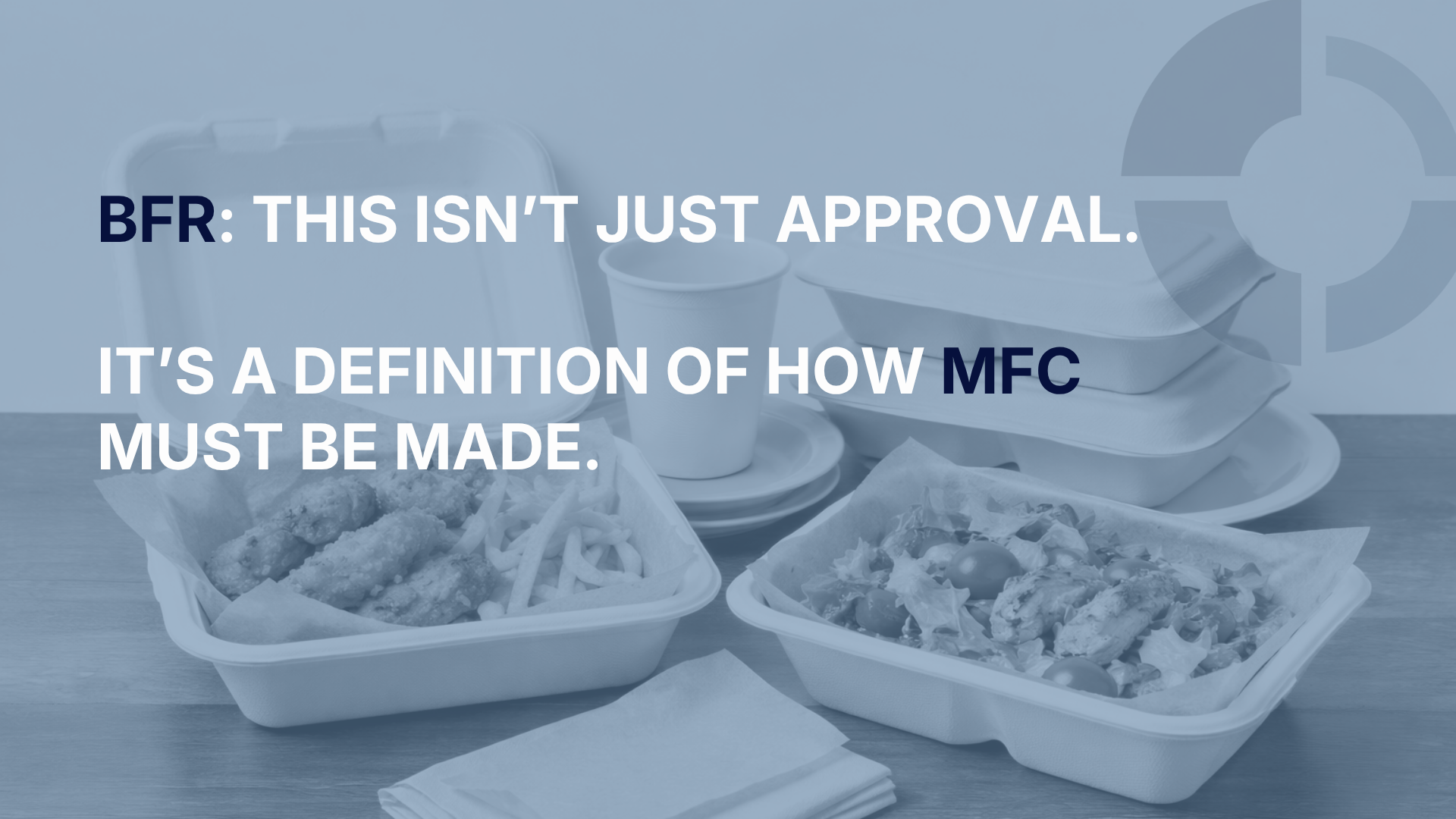
The inclusion of mechanically produced microfibrillated cellulose (MFC) within the German Federal Institute for Risk Assessment (BfR) Recommendations provides regulatory clarity for its use in food contact paper and board applications – shifting the conversation from compliance to industrial execution.
The importance of this development lies not merely in the listing itself, but in the specificity of the material definition. The BfR Recommendations recognise MFC formed by pure mechanical treatment of cellulose pulp, without enzymatic processing, comprising 80–100% cellulose fiber by weight and with a mean fibril diameter above 20 nm.
In food contact materials, regulatory recognition is inseparable from production method. The manner in which a material is generated forms part of its compliance profile. In this case, mechanically produced, additive-free MFC aligns directly with the recognised specification.
The listing applies across multiple BfR Recommendations, including:
- Paper and board for food contact (XXXVI)
- Baking and cooking papers (XXXVI/2)
- Filter layers (XXXVI/1)
- Absorber pads for food packaging (XXXVI/3)
- Polymer dispersions used in food contact systems (XIV)
For producers operating within European food packaging markets, this provides a defined and defensible compliance reference.
Global Food Contact Framework Alignment
Mechanically produced MFC generated via industrial grinding systems also sits within broader regulatory frameworks beyond Germany.
Grinder-produced MFC has received FDA clearance under FCN 002413 and has been evaluated within Canadian and Chinese food contact frameworks. It has been assessed as not constituting a nanomaterial under US EPA and EU definitions, and toxicological evaluations have not identified adverse health effects within the evaluated parameters.
For multinational packaging groups, alignment across regulatory jurisdictions reduces risk when developing fiber-based alternatives to plastic or fluorinated chemistries.
Application Relevance: Barrier Papers, Moulded Fiber Packaging, and PFAS-free food contact solutions.
Regulatory clarity alone does not drive industrial adoption. Performance data and process compatibility remain decisive.
Pilot and commercial-scale trials have demonstrated that controlled application of mechanically produced MFC increases sheet closure and reduces permeability in paper systems. While MFC is not itself a moisture barrier, its fibrillar network structure improves oil, grease and mineral oil resistance and enhances the efficiency of subsequent coating layers.
In moulded fiber packaging applications, internal addition of MFC has enabled significant lightweighting while maintaining mechanical strength and stiffness. Reduced porosity and improved oil and grease resistance performance have been observed at higher MFC contents, supporting development of PFAS-free food contact solutions.
These application outcomes connect directly to current industry drivers:
- Reduction of virgin pulp consumption
- Replacement of fluorinated chemistries
- Lightweighting of fiber-based packaging
- Improved barrier performance in recyclable formats
Recyclability, Biodegradability and Circularity of MFC-based Food Packaging
For food contact materials, regulatory acceptance must coexist with end-of-life performance.
Papers coated with Mechanically produced MFC have undergone testing under established recyclability (PTS-RH 021:2012), biodegradability (OECD 301B) and compostability (ISO 14855) standards. This reinforces compatibility with fiber-based circularity models and strengthens positioning within sustainable packaging strategies.
As Extended Producer Responsibility (EPR) schemes and recyclability standards tighten across Europe and North America, this alignment becomes commercially significant.
Industrial Scale and Process Control
Regulatory recognition must be understood alongside production capability.
Industrial wet stirred media mill grinders produce MFC in continuous mode, enabling consistent specification control and scalable throughput. Surface application technologies such as FiberLean on Top (FLoT) have been demonstrated in full-scale trials, achieving meaningful reductions in sheet permeability and improved surface functionality.
For food contact packaging producers, the remaining strategic questions are therefore operational rather than regulatory:
- Integration into existing paper machine configurations
- Control of fibrillation degree and energy input
- In-house generation versus merchant supply models
- Capital investment justification and utilisation rates
The BfR recognition removes uncertainty regarding material eligibility for mechanically produced MFC without enzyme pre-treatment.
Competitive advantage now depends on production control, process integration and economic discipline.
Strategic Implications for Fiber-Based Packaging
Mechanically produced MFC now sits within a defined European food contact framework, aligned with global regulatory evaluations and supported by industrial performance data.
This convergence of compliance, functionality and scalable production capability repositions MFC from a developmental material to a viable infrastructure component within fiber-based food packaging systems.
For organisations investing in barrier paper, moulded fiber, and recyclable packaging technologies, the regulatory foundation is now established. The focus shifts to execution.
If you are evaluating mechanically produced MFC for food contact applications, we would be happy to discuss process integration, production control and commercial feasibility.